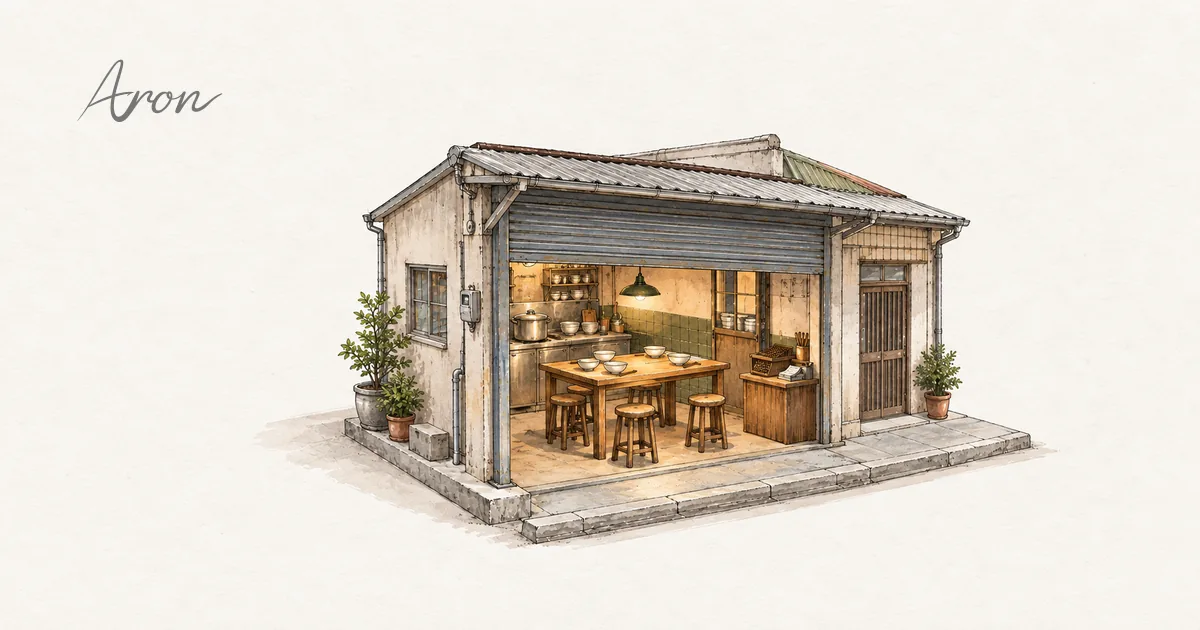
Spring Breeze Shokudo is a game I developed. I want to introduce how it plays and how its management systems connect with its characters.
The story begins in southern Taiwan in 1978. You return from Taipei and reopen Grandma's Spring Breeze Shokudo after six months of closure. Buy ingredients in the morning, set the menu and assign staff during the day, then close the books and share a staff meal. Outside is fictional Sin-kang-á Street. The Golden Dragon Grand Restaurant across the road will become a competitor.
Players familiar with the shop-management games 《便利商店》, 《夢幻西餐廳》, or Chinese Inn (《中華一番客棧》) will recognize the cycle of opening, stocking, and watching customers arrive. Here, that cycle belongs to a neighborhood: the same dish can mean something different depending on the weather, equipment, and people coming to eat.
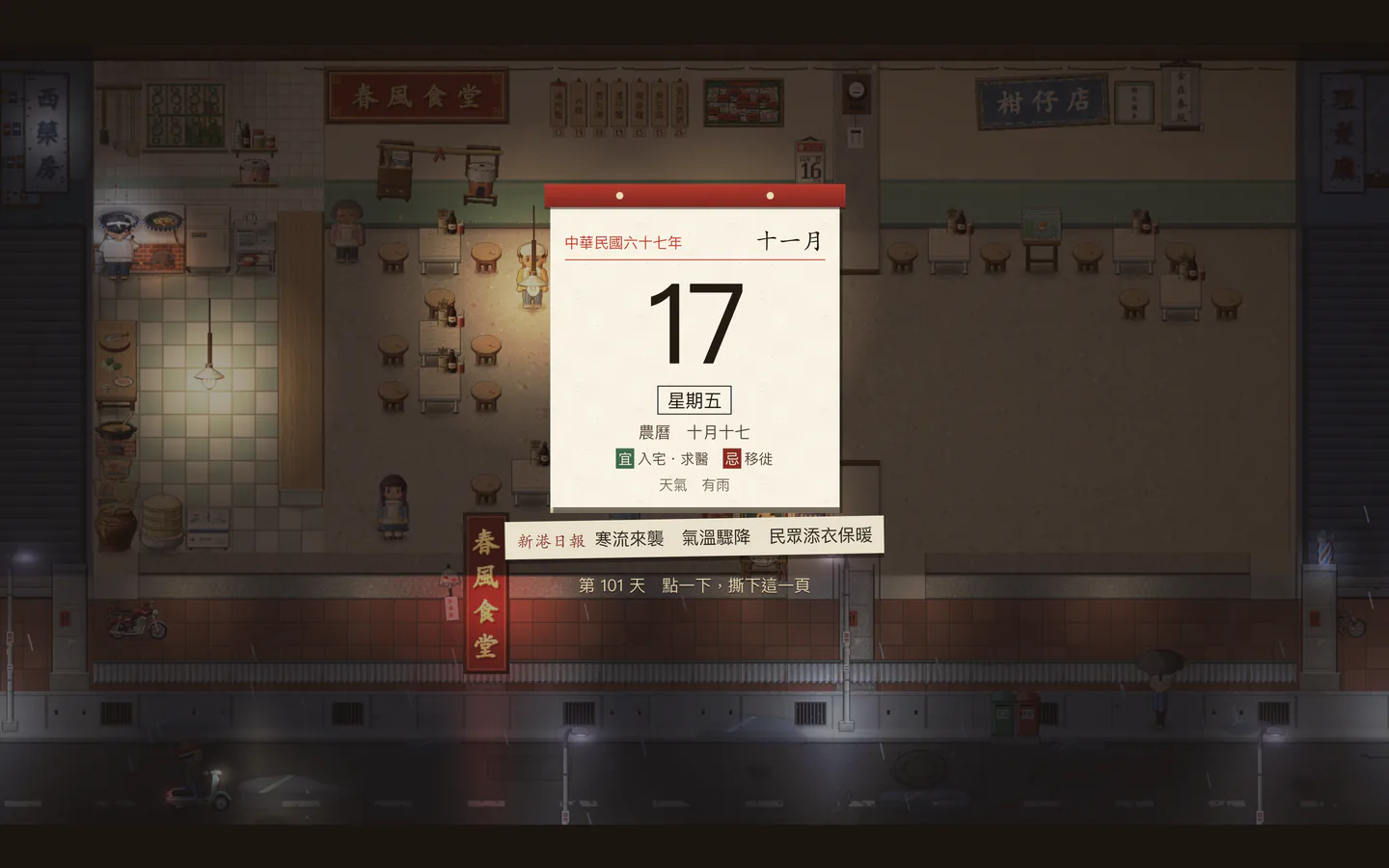
All eight images below are official game screenshots and open at their original size. Their layouts, staffing, and figures come from different demonstration saves. They do not all belong to the five-day demo or prescribe an optimal strategy.
Tomorrow's menu starts with today's decisions
At the market, you can shop stall by stall or use the shopping-list shortcut to replenish ingredients according to Grandma's estimate. The list responds to the daily recommendation and expected customer conditions. It saves repetitive purchasing without guaranteeing that everything will sell.
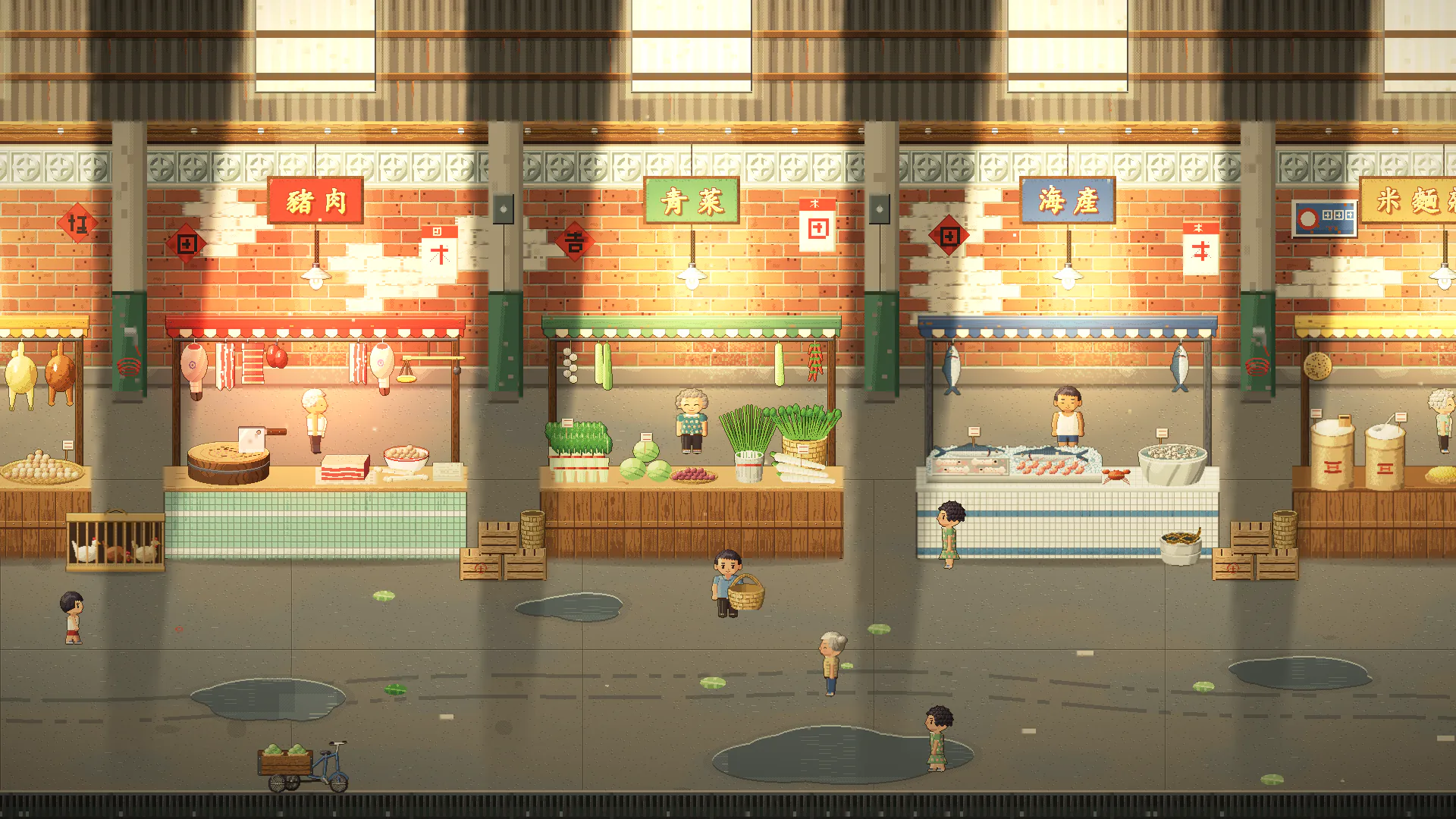
Fresh ingredients deteriorate overnight. Overstocking ties up cash; buying too little can end sales early. New dishes also require equipment: mung bean soup needs a two-door refrigerator, while eel noodles need a gas wok stove. Suppose you want to sell more mung bean soup in summer. The refrigerator cost, remaining purchasing cash, and whether to keep the dish after the season all belong to that decision.
The menu is consequently more than a list of unlocks. During service, prices, quantity limits, and the daily recommendation can change, while existing orders retain their original price. Higher prices affect entry decisions. Sales concentrated on the same dishes build food fatigue, with exceptions for regulars' favorites.
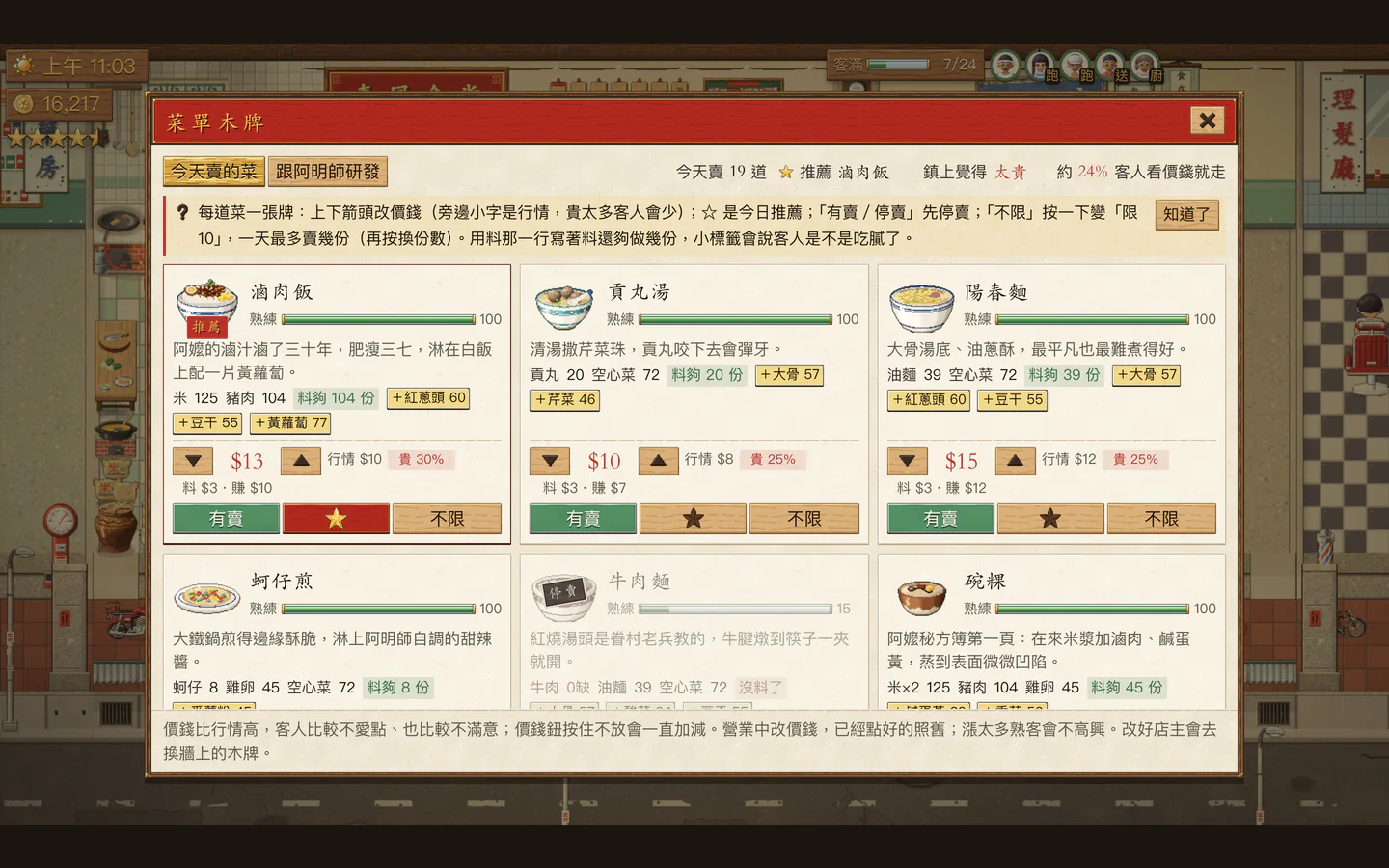
These connections are how I would explain the management depth. Learning a dish starts a decision about when to sell it, at what price, and in what quantity. Braised pork rice and milkfish congee have jobs beyond filling a collection.
Another table means another chain of work
The kitchen, seating, and service staff share one view. Full tables can look encouraging even while someone has waited too long. Cooking, carrying dishes, and clearing tables depend on each other; extra seats alone may not support more business.
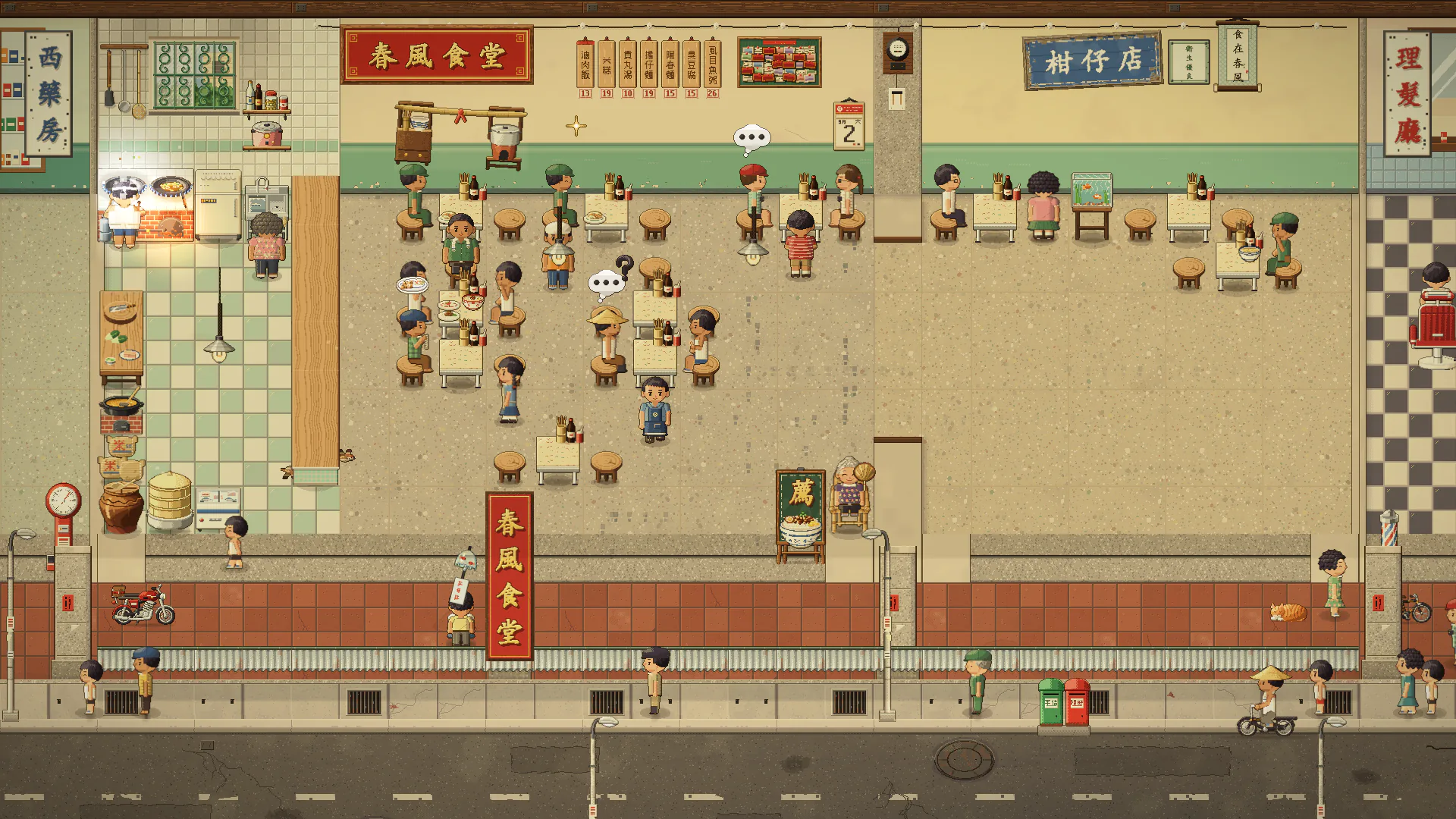
Staff can serve, clear tables, help in the kitchen, or deliver orders. Work uses stamina. Later in the full game, fatigue can slow work and cause mistakes, so five demo days do not expose every operating pressure.
Expansion moves the bottleneck. Can the kitchen keep up with another table? Who clears inside while someone is making deliveries? Reassigning work may help more than immediately buying equipment. It depends on where that day's service is getting stuck.
The weather and the restaurant across the street change preparations
A pharmacy, barbershop, photo studio, and motorcycle shop surround Spring Breeze. When the Golden Dragon offers business lunches, air conditioning, or live nakashi music, customers may cross the road. You can consider flyers, complimentary braised eggs, or concentrating on the service already in front of you.
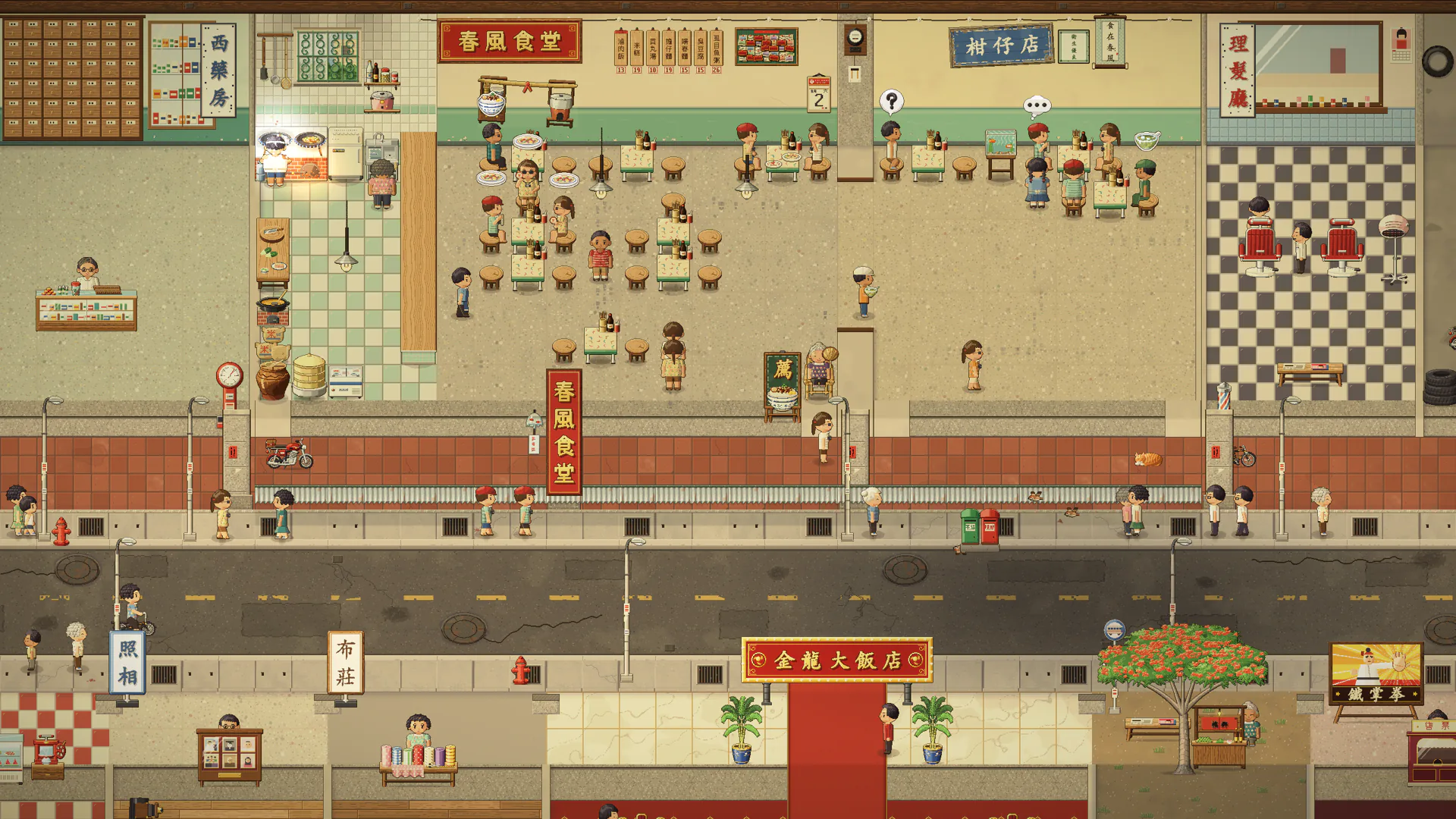
Rain also does more than change the scene. It affects the shopping list's customer estimate, while seasons affect demand for dishes. Seeing rain outside and deciding how much to prepare inside connects the two screens through a business decision.
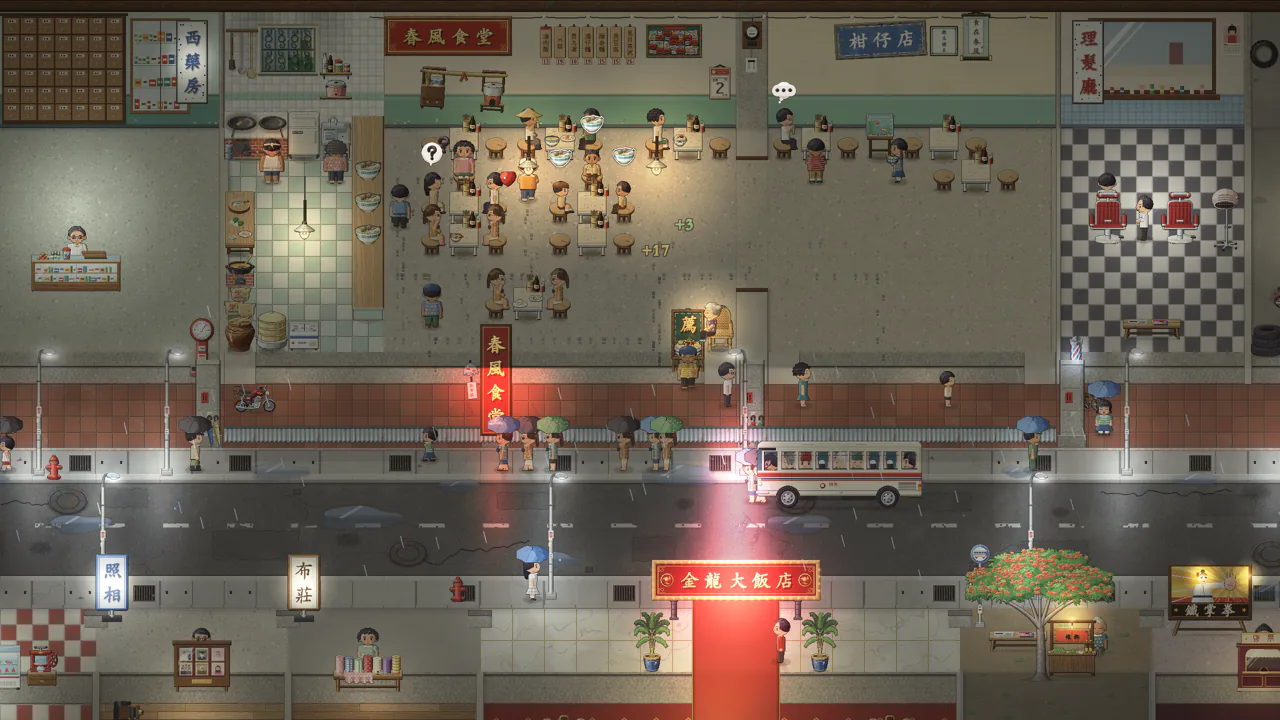
Regulars add another kind of familiarity. Driver A-Xiong likes braised pork rice; barber Master Chen comes for danzai noodles. A-Xiong gradually talks about driving and saving for a taxi license of his own. His story arrives across visits, without a complete biography at the first meeting.
Once you know who likes a dish, removing it from the menu affects someone recognizable. Regulars' responses to favorite dishes connect people with the business rather than putting a separate story beside it. I like this connection because repeated visits can make a person familiar without requiring the player to share memories of that era.
Closing time makes room to understand the day
The closing report brings income, expenses, spoilage, and customer reactions together. A profitable day with customers leaving after long waits may call for staffing or kitchen changes, rather than a price adjustment. Grandma's advice and the accounts connect today's result with tomorrow's preparation.
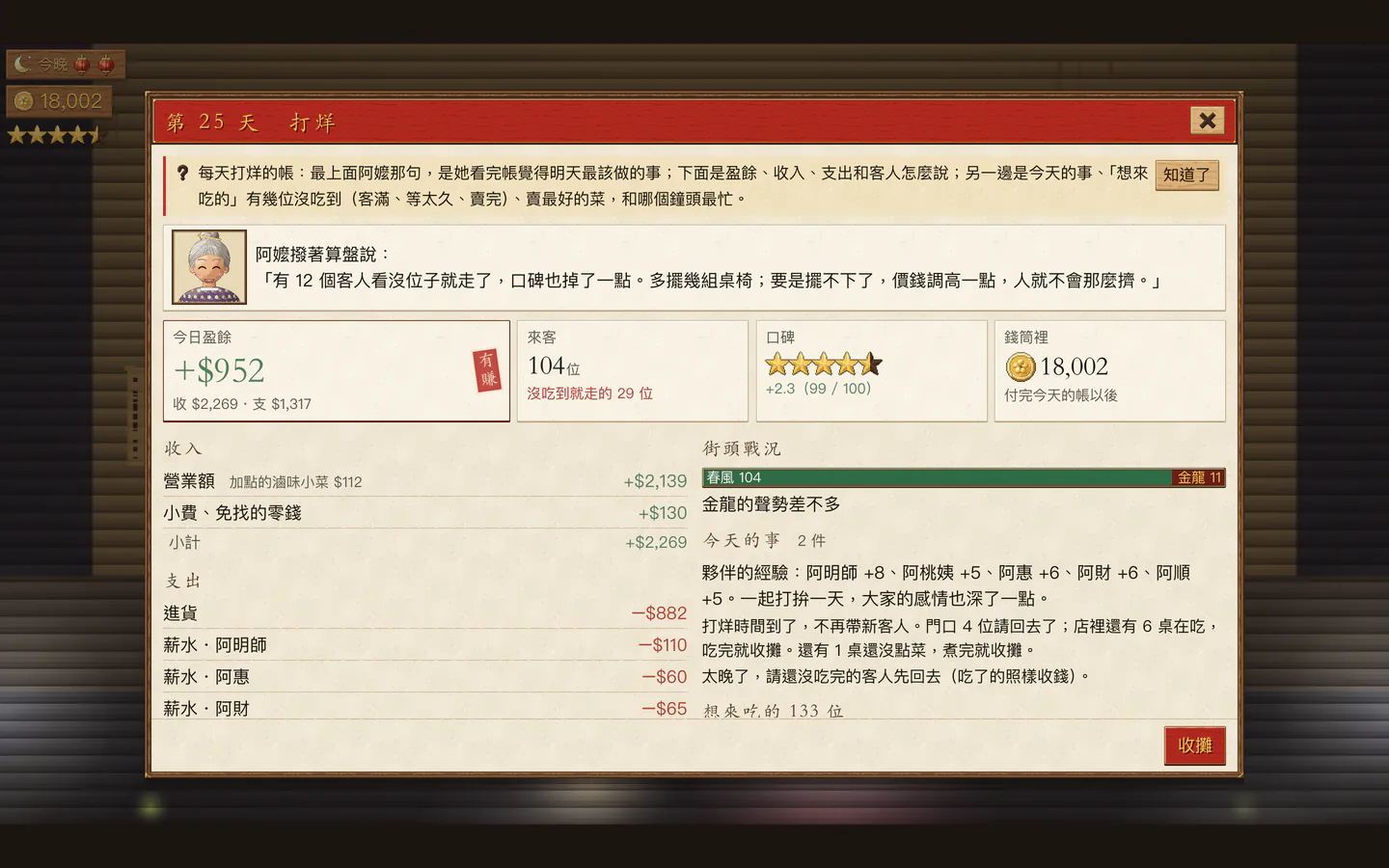
Staff have more to reveal after the meal. A-Hui wants to learn to sing; Chef A-Ming has family matters to discuss. Their daytime jobs do not describe their entire lives, but getting to know them takes time.
Two lanterns represent the evening's actions. Talking, practicing a dish, or walking to the temple each uses one, with two actions per night. Whom to talk with and what to practice become another allocation. The day also leaves a diary entry.
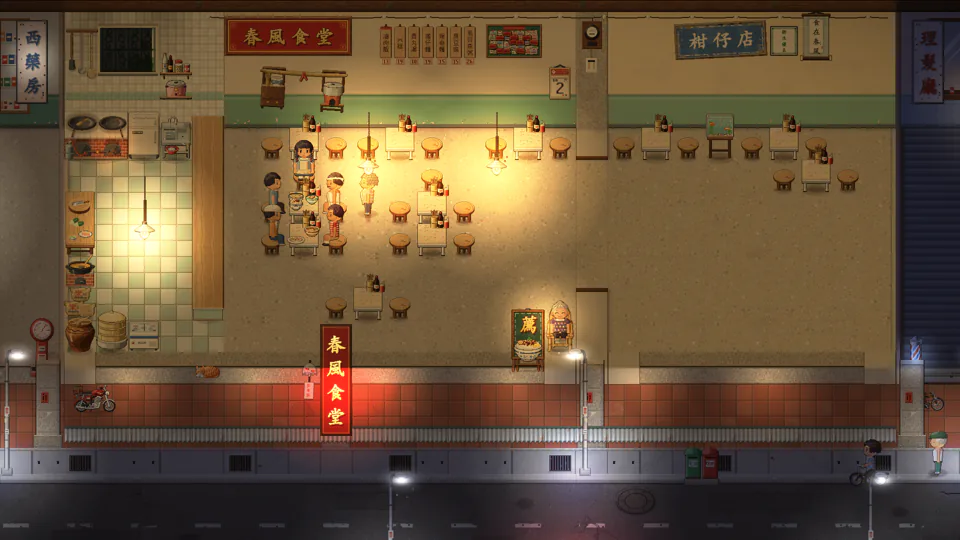
Connecting relationships to management carries a tension: players may turn conversations into a checklist of rewards. I want to acknowledge that tradeoff when introducing the game. Slowly getting to know the neighborhood means allowing some days to look similar.
The days continue, but mistakes leave work behind
A cash shortage does not immediately end the game. There are ways to open again, though borrowing, debts, and a smaller menu affect later plans. Typhoons, power cuts, local gangs, and damage to the restaurant also appear in the story. Warm pixels do not promise an entirely pressure-free experience.
Repeated service can become tiring too. Shopping shortcuts, guidance, and adjustable management pacing offer ways to reduce repetitive demands. This game suits players willing to make arrangements and get to know people through recurring daily work. Someone seeking only scenery may not enjoy every management requirement.
The free browser demo covers the first five in-game days, enough to try the shopping, service, and closing cycle. Later seasons, character development, and some mechanics described here are outside that scope.
As of October 27, 2026, the official site schedules Windows Steam Early Access for November 5, 2026 at 8 p.m. Taiwan time (UTC+8). The game supports Traditional and Simplified Chinese. The full mobile version, cross-device synchronization, and controller support remain planned. See the official FAQ and Steam page for updates.
The cover is an editorial concept illustration; the eight game images are © AOYUE DESIGN CO., LTD.